Rise Armament Black Fallout Super Sporting Trigger Honest Reviews

- Sort By
- Blade Blazon
- Blade Color
What Is an Aftermarket Trigger?
There are many vital components in an AR. Items like bolt-carrier groups, upper receivers, and handguards all play a part. They come together to grade one of the virtually popular firearm platforms in the U.S. But of all the parts and pieces, simply one offers a directly interface betwixt the gun and you: The trigger. This unsung hero sitting within the lower receiver is the first of every fired shot. Every aspect of a shooter's experience starts with the trigger. As you'll learn, how the trigger is designed and built can impact everything from how fast an AR can fire to how accurate shooters can be with the platform, whether it's an AR-15, a large-frame AR-x, or fifty-fifty a 9mm pistol-caliber carbine.
Before nosotros get into the details, let's look at what nosotros mean when we say "aftermarket trigger." In the original setup adult by Eugene Stoner, shooters fire AR-design rifles with what's often been chosen the standard, "mil-spec" trigger. Basically, this is a do-it-all trigger designed with combat apply in mind. Nearly military machine-outcome M16 and M4 variants feature this bones, multi-piece setup; it'due south built effectually a hammer, trigger, disconnector, and their corresponding springs.
However, like most things designed to practice information technology all, the mil-spec AR trigger doesn't really assistance shooters excel at any specific role. As the AR platform grew in popularity and shooters adjusted the rifle for a variety of roles, information technology became articulate that shooters needed different triggers to optimize the rifle for different roles. Individual industry stepped up and offered many unlike triggers designed to fit the needs of today'due south AR owners.
These "aftermarket triggers" offer benefits tailored to the needs of different AR owners. Choices range from cocky-independent, drop-in units to multi-piece triggers built similarly to the original mil-spec design.
Types of AR-15 Triggers
Equally you'll run across, there are many different types of AR-xv trigger options. It's important to understand the differences between them when making a decision.
Mil-Spec Trigger
Here'due south where information technology all started. When Eugene Stoner beginning designed the AR-15, he incorporated the multi-piece, single-phase trigger design that we've all come to know and not love all that much. Those who've owned a budget AR or an M4 clone equipped with a mil-spec trigger know that information technology's typically gritty, inconsistent, heavy, and altogether unsuited for any 1 thing in particular. Yet, let'southward not bash it too much. Information technology's durable, and it works. However, as ARs have become more versatile in commercial and professional person worlds, it's of import to accept different kinds of triggers meliorate suited to the tasks at manus.
Standard Trigger
At this bespeak, you might be wondering why we've broken out "standard" triggers from "mil-spec" triggers. Information technology's a off-white question. The answer is that all mil-spec triggers are standard triggers, but not all standard triggers are mil-spec triggers. These triggers could besides be characterized as "non–drop-in" triggers. Why? They provide enhanced features over mil-spec designs, but the overall construction and blueprint are similar to the mil-spec pattern trigger. There's a divide trigger, hammer, and disconnector, and they're all held in place past a trigger pivot and hammer pivot. Withal, those similarities are largely superficial.
Depending on the blueprint, upgraded standard triggers tin can take finely finished, polished engagement surfaces or even entirely dissimilar engagement surfaces. Many companies have found methods of providing modified trigger pulls by irresolute how the trigger interacts with the hammer or modifying the resistance offered past the hammer spring.
Drop-In Trigger
Much of the time when AR owners discuss aftermarket triggers, they're talking about "drop-in" units like the ones offered past Ascent Armament. A drib-in trigger includes all the traditional components. The trigger as well however acts on the hammer. Lastly, in that location'due south still a disconnector to reset the trigger and concur back the hammer. However, there's actually one more than component in this trigger that isn't included in the others: the housing.
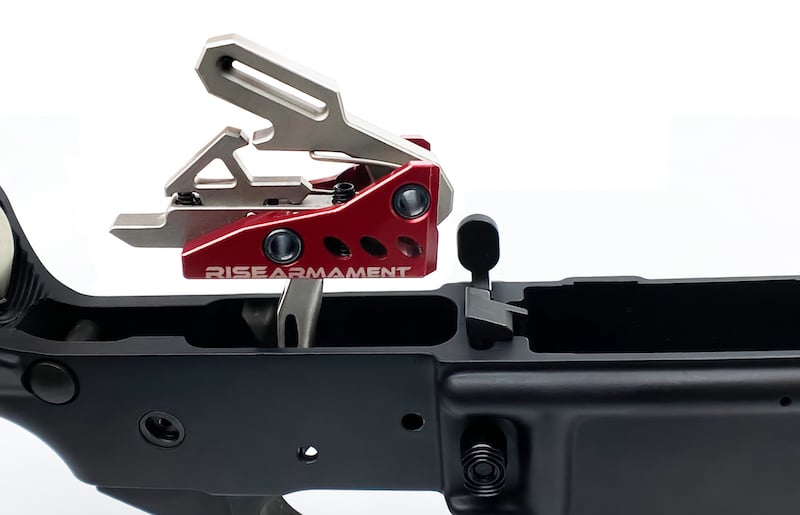
Instead of each component standing on its own, the trigger housing is a metal unit that contains every AR trigger component inside it, and each of these components are held in place through two bushings, sized to allow the trigger pin and hammer pivot to slide through. In these self-independent units, the trigger and hammer pins aren't actually holding the trigger together; the housing and bushings are. Instead, the pins that normally hold a mil-spec trigger in place are used to ensure the housing is located in the correct position inside the lower receiver.
This cocky-contained design is also where the "drop-in" trigger gets its proper noun. Rather than having to wrestle each spring-loaded component into place inside the receiver, the entire trigger unit of measurement simply drops into place inside the receiver. Meanwhile, the pins are pushed into identify without having to keep tension on a trigger or hammer jump. Equally a issue, they're frequently easier and faster to install than non–driblet-in units.
Lucifer-Class Trigger
"Match-grade trigger" is a term some companies use to describe a trigger that is higher performing than a mil-spec 1. These may feature finely tuned parts, lighter pull, shorter reset, cleaner break, so forth. These triggers have some of the most desired features a shooter may desire.
Single-Stage AR Triggers
We've covered different AR triggers and their builds. However, in that location are dissever types of AR triggers in the drop-in and standard realm. They provide different features, depending on what kind of shooting you're doing. One of the mutual triggers found on the market place is a single-stage design; this is the blazon of trigger establish in mil-spec AR-15 rifles. With this type of trigger, sear engagement is the obstacle preventing the hammer from heading toward the firing pin. Equally soon as the trigger-pull starts, the trigger sear is already pushing against the hammer sear on its way to the break.
A good single-stage trigger volition have a well-designed and finely finished sear engagement. It should prevent have-up, while providing a well-baked snap once the hammer breaks free of the trigger sear. Information technology should also limit overtravel.
Depending on use, trigger pull weight tin can vary in single-stage designs. AR trigger pull weights are measured in pounds. Mil-spec triggers typically have a pull weight between 5.5 and 8.5 pounds. So, too, can distance be varied in these designs. Mil-spec triggers typically have quite a bit of travel both before and after a trigger break. Meanwhile, competition-style triggers have overall trigger travel measured in fractions of an inch.
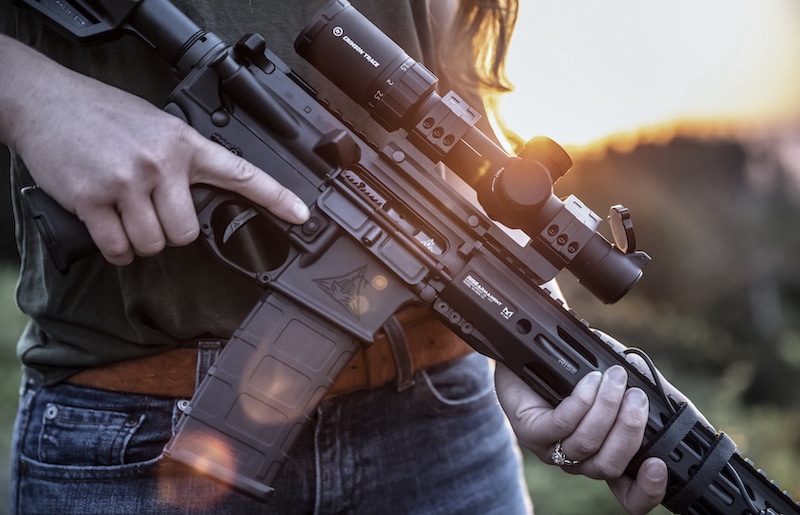
Lightweight, unmarried-stage triggers are the aureate standard when it comes to contest and are what many shooters prefer. However, they aren't necessarily the perfect choice for everyone. Some don't like that the gun fires so soon after pulling the trigger. However, a long, heavy trigger pull increases the likelihood of the shooter disturbing the rifle and pulling the shot off target before a shot breaks. Therefore, some people prefer two-stage triggers.
Two-Stage AR Triggers
Typically, a two-phase trigger provides a long first stage that allows the shooter to pull rearward until they hit the beginning of the 2d stage, at which fourth dimension they can release the trigger or continue to pull to burn the shot.
The do good of a two-stage design is that information technology allows shooters to get into position and pre-phase their shots through the first stage. Once shooters hit the end of the first stage and they feel the wall that marks the start of the 2nd stage, information technology allows them to finalize their shot placement, intermission, and pause through that wall to burn a shot. The short travel of the second stage helps ensure in that location's no shift in a shooter's grip that could cause them to come off target; this is a reality that isn't possible with a heavy-pulling version of a unmarried-stage trigger.
From the standpoint of professional applications, that first stage allows shooters to go through a multi-step process before deciding to intermission a shot. If, for whatever reason, shooters decide to not become through with their shot, slackening their trigger finger brings the pull correct back through the first phase.
The primary disadvantage of almost ii-stage triggers is when rapid follow-upwards shots are necessary; many two-stage triggers can exist inferior in this category. Due to the restrictions on most two-stage triggers' designs, they tin besides feel mushy if they have lower pull weights.
Mechanics of a Drop-In AR-15 Trigger
We've already covered some of the mechanics when discussing types of AR triggers on the market. But just so we're on the same page, permit'due south discuss what happens inside the lower receiver when firing the AR. In a "cocked-and-locked" AR, the hammer holds in its ready position inside the lower receiver past the trigger, which has a machined surface at the front that catches a matching surface nigh the hammer's pivot point.
The Firing Process
When on "condom," the selector switch uses a cylindrical drum running across the rear gap in the lower receiver that prevents the rear of the trigger from traveling upward. A flat cut in this pulsate allows clearance for the trigger to travel in one case the shooter moves the selector switch to the "fire" position. At this bespeak, the shooter volition provide pressure on the trigger blade inside the trigger guard. This pressure causes the AR trigger to pivot around the trigger pin or bushing. As the rear of the trigger travels upward, the sear surface at the front slides across the engagement surface located on the hammer. This reduces the amount of engagement area that prevents the hammer from pivoting.
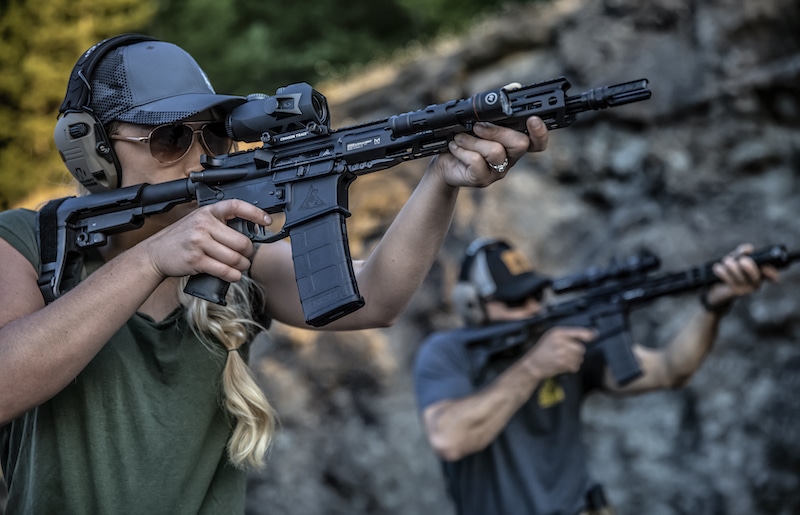
Once the trigger sear clears the hammer sear, the hammer, under spring tension, gets driven upwards toward the firing pin. Information technology hits the rear of the pivot with plenty pressure to detonate a cartridge primer. As the AR–15 bolt cycles rearward to eject a spent cartridge and pick upward a new cartridge from the magazine, it also pushes the hammer back downwards into the lower receiver. The disconnector grabs the hammer and holds it down until the shooter releases force per unit area on the trigger. Once the shooter releases the trigger, the disconnector allows the hammer to residuum on the trigger sear. The shooter again applies force per unit area to the trigger blade, starting the procedure all over again.
What Happens to the Trigger Over Fourth dimension?
Throughout this process, the repeated engagement betwixt the sear surfaces on the trigger and hammer will lead to some self-polishing of the flats over time, causing the trigger to go lighter and cleaner through repeated use. However, the geometry of the sear surfaces ensures there will e'er exist a secure, repeatable date between the hammer and trigger. At no point should an aftermarket AR trigger get unsafe to shoot or become more likely to discharge unintentionally.
As an AR trigger can change slightly over time and article of clothing, information technology's a logical thought to wonder whether there's an "expiration date" for your drib-in AR trigger. The short reply is no; your aftermarket AR trigger will last equally long equally your AR. However, every bit with every part of a firearm, the performance and longevity of your trigger depends on how well you make clean and maintain it.
Maintenance & Cleaning Tips for Your Drop-In AR-15 Trigger
Then, is at that place a sure kind of maintenance for an aftermarket AR-xv trigger? As much as nosotros'd like to tell yous that there's a i-size-fits-all solution, there isn't. Dissimilar companies have different advice for their triggers, so it'south best to check with the specific visitor.
With that said, there are some best practices that are generally good to follow. Well-nigh of those basic measures are merely common-sense methods. Most ARs on the market place operate using a straight-impingement system, which causes gas and fouling to travel back into the receiver. With that in heed, information technology's of import to remove this carbon and fouling buildup at to the lowest degree every 500 rounds.
As with all parts of your gun, it's important to inspect and clean your drop-in trigger when you lot do your 500-round cleaning and inspection. If there is carbon or other droppings in the trigger, y'all can generally articulate information technology with some condensed air. Next, follow it up with some oil or grease on the sear-appointment surfaces. Not only will this protect the metal, it'll also facilitate a polish, clean trigger pull.
Finally, y'all might have some setscrews within your trigger housing that push the trigger housing against the lesser of the receiver and exert pressure against the trigger and hammer pins. You might besides have some anti-rotation or anti-walk trigger pins secured into place with small screws. Now's a practiced time to snug those up and make certain they aren't vibrating loose. Be sure they're snug, just don't overtighten the setscrews.
Advantages of a Drop-In AR-15 Trigger
All this talk almost trigger types, mechanics, cleaning … is it really worth it? What are you going to go out of an aftermarket trigger anyway? Quite a lot, actually. See, the beauty of aftermarket AR triggers is the insane number of choices out there. Each one is tailored to a particular use or even a person's upkeep. With the sheer range of triggers bachelor today, at that place's not much reason to stick with a mil-spec.
An aftermarket trigger provides a cleaner, smoother trigger pull. That pull aids in accuracy and repeatability, allowing AR owners to get the most out of their rifles. Even a basic, budget AR tin can come across notable increases in downrange performance through a simple trigger swap. Why? The consistency provided in a purpose-congenital AR trigger allows shooters of every experience level to focus on the other variables involved in making a perfect shot. Take a gritty, inconsistent trigger out of the equation and focus on the other essentials of marksmanship — like sight moving-picture show, jiff control, and follow-through.
Aftermarket AR triggers also allow users to strop their rifles for specific tasks. We've discussed some of the different trigger types available today. Within each of those types are countless dissimilar variations. Some triggers work for competition, others for hunting, and yet more for domicile-defense or professional use. Every trigger pick brings new capabilities to the table and allows shooters to excel at whatever niche they choose to explore, rather than having to wrestle with a general-purpose, mil-spec trigger that doesn't really offer any particular benefit.
What Kind of Aftermarket Trigger Should I Buy?
There are a couple of ways to become well-nigh choosing an aftermarket AR trigger. It depends on your starting point. For owners of budget, mil-spec AR-15s looking to upgrade, it'southward important to know exactly what it is near the mil-spec trigger you don't similar, every bit well as what you lot're trying to exercise. Is it gritty? Does it travel also far for your preferences? Are y'all trying to become more-accurate groups? Shoot faster? Depending on the answer to these questions and more, your pick of aftermarket trigger volition modify. Finding the right trigger depends on knowing what you lot like and don't like in an AR trigger. For that, there's a great manner to observe that out: become shoot!
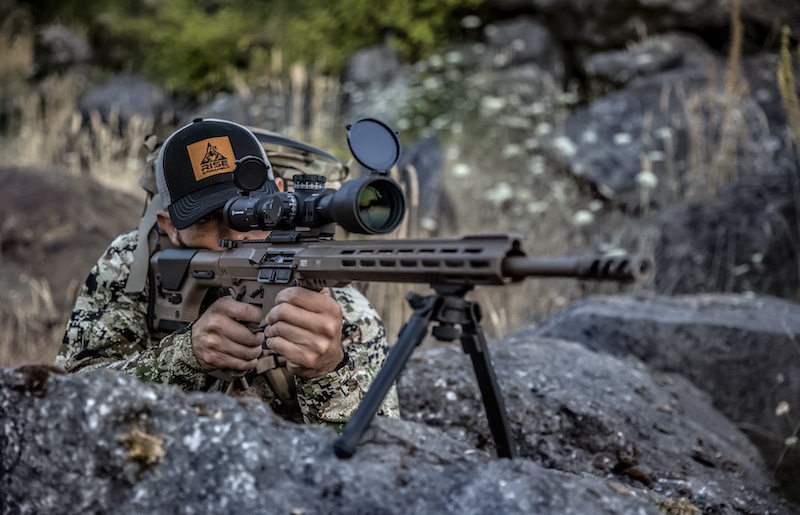
The other potential option is if you're building an AR from a stripped receiver. There, yous need to make up one's mind what kind of trigger to put in your AR-15. Obviously, you lot tin't shoot it because there's no trigger! Well, information technology still depends on what you're planning to utilize the gun for. In that location are different schools of thought on what triggers piece of work best for which disciplines.
Long Range
For a long-range gun or a hunting rig, many believe having a 2-phase trigger that provides have-up for a decision-making phase can be helpful. All the same, military sniper systems come standard with single-stage triggers, so that's debatable.
Competition
For a fast-paced, action-way competition, having a light, single-stage trigger with a fast reset can aid shooters breeze through stages with reduced divide times and faster follow-up shots.
Dwelling house Defense
For dwelling house-defense force apply, going with a slightly heavier, combat-style trigger might exist a safer bet. However, there are many who fence that a lighter trigger is safer for home defense since it typically leads to more authentic shot placement. One consideration (and it's a big ane): You lot, as the shooter, are responsible for the final resting place of every unmarried bullet that exits the muzzle of your gun. The trigger is what initiates that exit. Then y'all want to pick a trigger that maximizes the likelihood of every round going exactly where yous want, when you lot want.
Of course, choosing the "best" AR-15 trigger is an entirely subjective task. Every shooter has different preferences and dissimilar thoughts on what's best for different shooting scenarios. For a showtime-time AR possessor, it's non a bad thought to piece of work with a mil-spec trigger. Firstly, discover its pros and cons. Then, discover an AR trigger that addresses those elements of a mil-spec design that are the most bothersome and work with that pick. Information technology might take a few tries to settle on a trigger yous like best. But remember, in that location are plenty of reasonably priced, aftermarket triggers on the shelf that offer plenty room for any budget to try out a few.
Picking an AR-fifteen Rifle Trigger
It'due south no surprise the trigger is one of the nigh important upgrades an AR-15 owner can make to a rifle. On today'due south market, there are plenty of trigger options, but it all depends on what yous're comfortable with.
The word shooters around the earth associate with Ascent Armament is "trigger;" when y'all run across our options, you lot'll know why. We offer a number of top-rated aftermarket drop-in trigger options for your AR-10, AR-15, or PCC. Used past competition shooters, law enforcement, and more than, RISE'due south triggers are the most trusted options in the industry. Our builds prove themselves with each pull.
Our RA-535 APT — the Ferrari of triggers — is the one that started information technology all. Since and so, we've added several new triggers to our lineup. The Rave 140 is available with either a curved trigger blade or a apartment trigger bract, depending on your preference. Then there'south our top-of-the-line, super fast Blitz trigger, which comes in at less than $200. There are plenty of other options too. So find a driblet-in trigger that works best for your AR. Once you lot accept, head over to our "how to install a trigger" tutorial page. After that, yous'll be all gear up to start shooting with your new RISE trigger.
Championship

YOUR CART
Your cart is currently empty.
Render to Store

RA-701 Compensator – .22 cal or .30 cal - Stainless Steel, .22 cal
Source: https://risearmament.com/product-category/triggers/
0 Response to "Rise Armament Black Fallout Super Sporting Trigger Honest Reviews"
Post a Comment